Paris-Brest-Paris 2027
Paris-Brest-Paris is 1,220 km from Rambouillet to Brest and back, inside 80, 84 or 90 hours, with up to 8,000 riders from around the world. It comes round every four years, and the next one starts on 22 August 2027. This is the year ahead: the dates that matter, how to qualify and register, what the ride is like, and the rules that cost time.
At a glance
- km, out and back
- 1,220
- metres of climbing
- 11,000
- hours for most riders
- 90
- When
- 22 to 26 August 2027, the 21st edition
- Start and finish
- Château de Rambouillet, 50 km south-west of Paris
- To qualify
- Four ACP brevets of 200, 300, 400 and 600 km, 1 Nov 2026 to 30 Jun 2027
- Results
- Times only. Nobody is ranked.
- Checked
- Against the organiser’s regulations, version 7 of 8 September 2026. They can change until August 2027.
PBP began in 1891 as a race run by a Paris newspaper. Since 1931 it has also been ridden as a randonnée, and since the last race in 1951 that is all it is. In 2023, 6,820 riders from 70 countries registered.
The year ahead
Most of PBP happens before August. Missing one date in spring can cost you your place, so these are worth putting in a calendar now.
- To 31 Oct 2026Your longest brevet this season sets your pre-registration dateThe window runs from 1 November 2025.
- 1 Nov 2026The qualifying window opensFour ACP brevets of 200, 300, 400 and 600 km, ridden by 30 June.
- 16 Jan – 27 MarPre-registration opens in six stepsLongest brevet first, a fortnight apart. €50, and you choose your start.
- 31 MarPlaces held for French riders are releasedUntil then, 2,500 of the 8,000 places are kept for them.
- 29 MayRegistration opensYou can start once three of your four qualifiers are done.
- 12 JunUnused pre-registrations are releasedIf you haven’t started registering with three brevets.
- 30 JunLast day to ride a qualifierLeave time for it to be validated.
- 3 JulLast day to cancel with a refundEverything but the €50.
- 4 JulRegistration closes at 23:59 in FranceAll four homologation numbers entered, and paid.
- 21–22 AugCollect your rider pack in RambouilletThe day before you start. Sunday starters can also collect on Friday afternoon.
- 22–23 AugThe startSunday afternoon and evening, or Monday morning.
- 26 AugEvery start’s time runs outThursday, between midnight and 18:00 depending on your start.
Dates from 16 January are in 2027. Registration times are noon in France, which is 11:00 in Ireland and the UK.
The first deadline is close: a brevet ridden before 31 October 2026 still counts towards your pre-registration date.
Pre-registration
Pre-registration is optional, but places go first come, first served, and it is how you get the start you want. It opens in six steps. Riders with the longest brevet from 1 November 2025 to 31 October 2026 go first, and each step after that is a fortnight later.
It has to be homologated by ACP: you enter its number when you pre-register.
It costs €50, which isn’t refundable but comes off the entry fee. Pay within three full days or the booking is cancelled. You choose your start when you pre-register, and you can change it later if there’s room. For a tandem, the rider with the longest brevet books for the team.
Let the tracker keep your PBP year
Sign in with Strava, add PBP 2027 to your plans, and the free tracker works out your pre-registration date from your rides, ticks off your four qualifiers as you ride them, and counts down to each deadline.

Qualifying
To qualify, ride four ACP brevets (BRMs) of at least 200, 300, 400 and 600 km between 1 November 2026 and 30 June 2027. A longer brevet can take a shorter one’s place, and an RM 1200 or longer ridden in the window counts too. You must be 18 on the day you start.
- 200km or longer
- 300km or longer
- 400km or longer
- 600km or longer
200 · 300 · 400 · 600The standard series.300 · 300 · 400 · 600A 300 fills the 200 slot.200 · 300 · 400 · 1000A 1000 fills the 600 slot.200 · 300 · 1000Three rides. Each ride fills one slot.
Only brevets homologated by ACP count, and registration asks for their numbers. Riders outside France can check theirs in an ACP account: choose “Non French” as your federation, add your club, and your brevets appear under Results, then BRM. Audax Ireland explains how.
The fourth brevet must be validated before 4 July, and results take time to reach ACP. Ride your 600 well before the end of June, with a second date in mind in case it goes wrong. 400s and 600s have the fewest dates. The calendar lists every Audax Ireland brevet, and the 2027 dates go in as soon as they’re published.
“Qualifiers are where we learn our trade and are not a form of punishment.”
Ride them on the bike and kit you’ll take to France. Irish riders often add the Easter Flèche to practise a night without sleep, because most PBP riders ride through the first.
Registration, fees and refunds
Registration opens at noon French time on 29 May 2027, and you can start as soon as three of your four brevets are done. It is processed only once all four numbers are in, and your place is confirmed when payment is accepted. If the event is full, you go on a waiting list and your payment isn’t taken. Registration closes at 23:59 French time on 4 July.
Payment is by PayPal only, for one rider or a group. A place can’t be transferred or resold. The fee hasn’t been published yet; the €50 for pre-registration is part of it.
Cancel by 3 July 2027 and you get everything back except the €50. From 4 July nothing is refunded. If the organiser has to cancel the event, the regulations say there is no refund.
What the fee covers
Included: the route signs and GPX, the vest and bottle, the brevet card and document pouch, the frame plate with its chip, luggage storage at the start, tracking at controls, first aid, motorcycle marshals, a meal at the finish and the medal.
Not included: food, showers and beds at the controls, your accommodation, and getting home if you abandon. Holders of a 2027 FFCT licence get €20 off.
Choosing your start
Most riders take a 90-hour start on Sunday evening. The 80-hour starts leave earlier on Sunday for faster riders. The 84-hour starts leave on Monday morning and spend one night fewer on the road. Choose the start that fits the sleep plan you have actually tested, not the earliest one left.
- 80hSunday 16:00–16:45Solo bikes · waves A to DFinish by Thursday 00:00–00:45 · at least 15.3 km/h overall
- 90hSunday 17:00Tandems, tricycles and special bicycles · wave EFinish by Thursday 11:00 · at least 13.6 km/h overall
- 90hSunday 17:15Optional women’s wave · wave FFinish by Thursday 11:15 · at least 13.6 km/h overall
- 90hSunday 17:45–21:15Solo bikes · waves G to UFinish by Thursday 11:45–15:15 · at least 13.6 km/h overall
- 84hMonday 05:00–05:45Solo bikes · waves V to YFinish by Thursday 17:00–17:45 · at least 14.5 km/h overall
- 84hMonday 06:00All bikes · wave ZFinish by Thursday 18:00 · at least 14.5 km/h overall
Times in France. Waves of about 300 leave every 15 minutes. Minimum averages are the route’s 1,220 km over the whole limit, stops included.
New for 2027: every control opens and closes at the same times for all starts, so your only personal deadline is the finish. Women can start in any wave, and wave F is an optional women’s start; a second may be added. Tandems, recumbents, velomobiles, tricycles and other special bikes can start only in wave E or wave Z.
The 2027 route
The route has been redrawn for 2027. Outward and return roads are mostly separate, Brittany is ridden as a clockwise loop, and the return passes near Mont-Saint-Michel and through Chartres. Brest is at about 590 km. The first stage runs 119 km to a food stop at Mortagne-au-Perche, with 1,150 m of climbing.
- RambouilletStart
- Mortagne-au-PercheFood stop, km 119
- Villaines-la-Juhel
- Fougères
- Tinténiac
- PontivyNew
- PleybenNew
- Brestkm 590
- CallacNew
- Loudéac
- Tinténiac
- Roz-sur-CouesnonNew, no support cars
- Fougères
- Villaines-la-Juhel
- Mortagne-au-Perche
- ChartresNew
- Rambouilletkm 1,220
Squares are controls, the dot is a food stop. Stage distances, GPX files and control times are still to be published.
The route is arrowed, in a different colour each way, but arrows go missing: carry the GPX when it’s published, and don’t plan with a 2023 file. Most controls sell food and have showers and beds, run by the towns for a fee. Mechanics aren’t everywhere. There can be secret controls too, and leaving the route voids the event insurance.
The ride itself
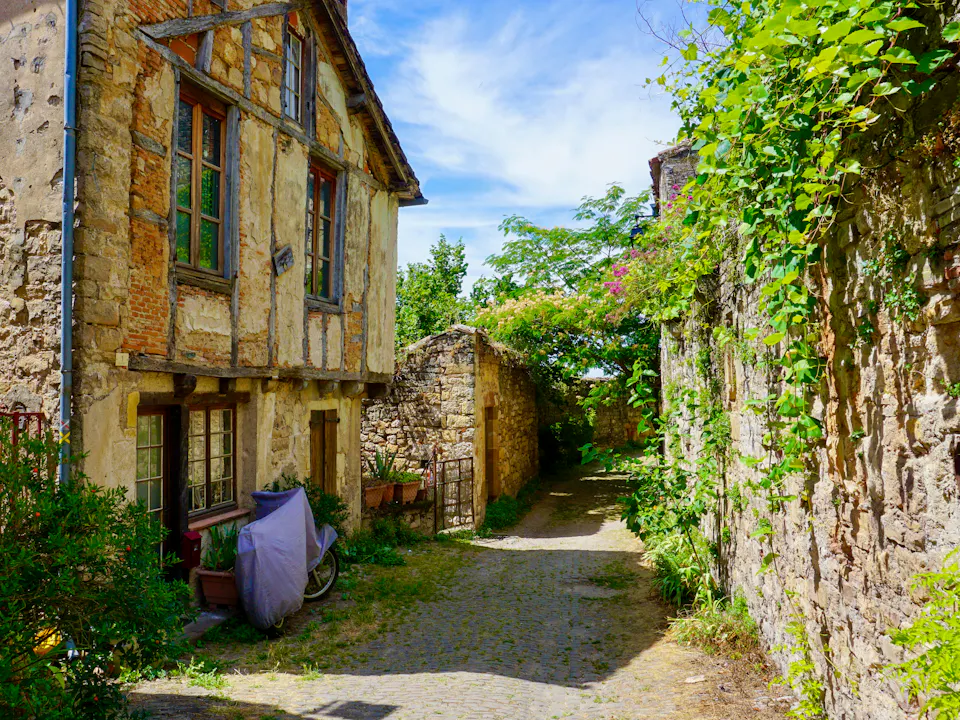
Villages all the way to Brest. 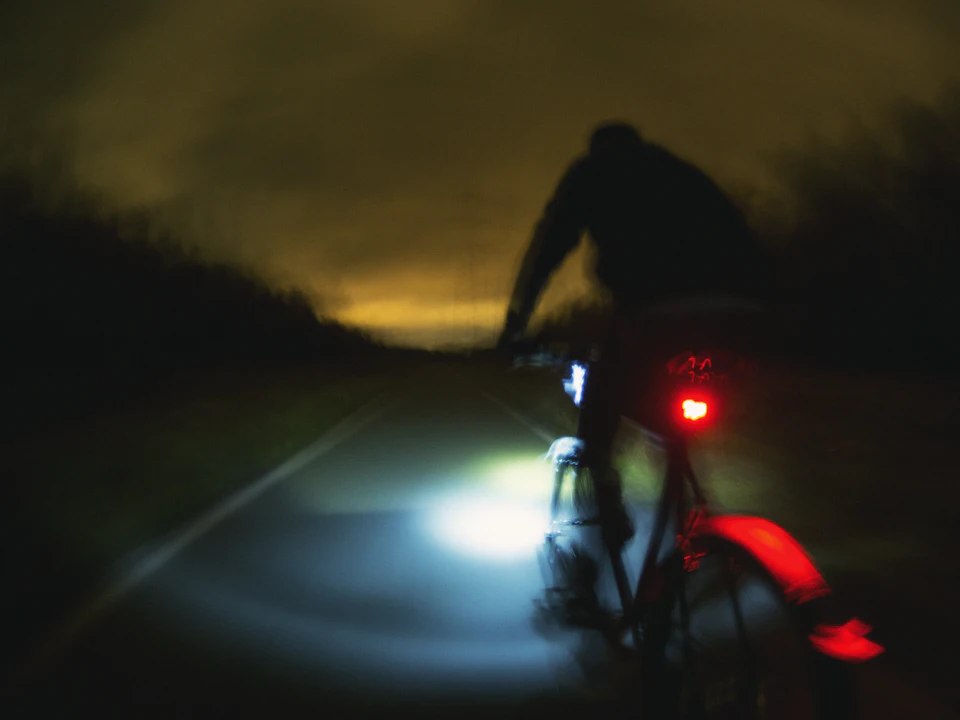
Every rider rides through the night. 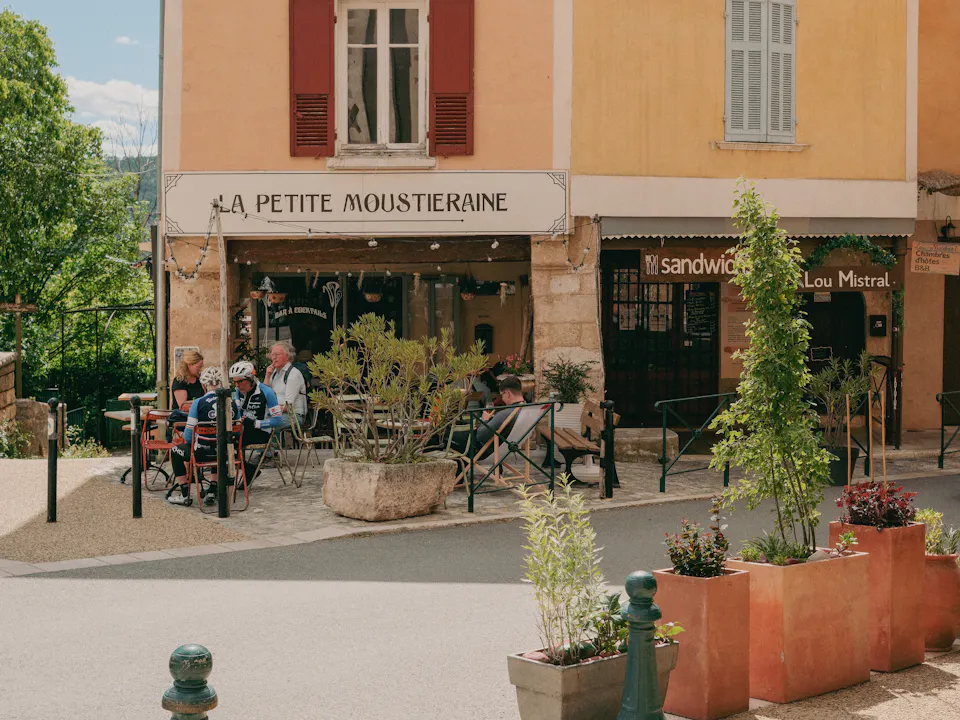
Towns turn out for the riders.
The start
Collect your rider pack in Rambouillet the day before you start; it isn’t optional. On the day, be there at least an hour early. Your lights, vest, helmet and the chip on your frame plate are checked in the castle park before you go, and a missing one can hold you back. Lead vehicles take each wave out of town, and passing them costs an hour.
“the first 120k went by in a fast-moving blur”
Hundreds of excited riders make the first hours the most dangerous. Ride your own pace from the start: the bunch will be going faster than you can keep up for three days.
Controls
At every control you need a stamp in your brevet card and a read of your chip, and missing both means disqualification. Check the card before you leave. Controls are busy: queues, narrowing food choices and a wait for a bed. Have a routine, and carry enough food to skip a crowded stop.
“I never once left a control with the same people I arrived with”
Sleep and the night
There is no right amount of sleep, only the plan you’ve tested on a 600 or longer. Dormitories are basic, so bring earplugs, an eye mask and a warm layer. The hardest hour is often dawn, and falling asleep on the bike is the real danger. If you’re drifting, missing turns or seeing things, stop somewhere safe and sleep.
“I got a dose of the “noddies” around 5am”
“Do not take drastic decisions when you are at your low points.”
The villages
Towns along the route turn out day and night. People set up tables of water, coffee and cake at their gates, and whole villages cheer riders through.
“shouts of “bonne route” and “bon courage” kept us all going”
The finish
Finish within your limit and your card is validated at the arrival control, you get the medal and a meal (served until Thursday evening), and your time goes into the results, published late in 2027. You can’t finish in less than 40 hours. Arrive late but before noon on Friday 27 August and you are “out of time”, which still earns the medal.
“It was painful… but I finished smiling!”
If you abandon, tell a controller so your status is recorded. You keep your frame plate and brevet card, and getting yourself and your bike back is up to you, so know where the railway stations are. The chip only records control passages, so family following along will see long gaps between them: agree when you’ll call.
Rules that cost you time
Any bike you power yourself through a chain is allowed, on two or three wheels and no more than a metre wide. Nothing electric. Unusual machines have to be approved by ACP. Aerobars are allowed, though the organiser strongly advises against using them behind another rider.
- Lights fixed to the bike, visible from 100 m in front and 150 m behind, working all the time. No flashing rear light. Carry backups.
- A hard-shell helmet the whole way.
- A hi-vis vest at night and in poor visibility, never covered.
- No professional team jerseys.
- A support car must be declared, follow its own route, and meet you only at controls. None at all at Roz-sur-Couesnon.
- 1 h
- Overtaking the lead vehicles at the start
- Breaking French traffic law, or using a phone while riding
- Drafting someone who isn’t in the event
- Taking down route signs
- 2 h
- Littering
- No lights at night or in poor visibility
- No hi-vis vest at night, or a hidden one
- No helmet
- Ignoring a controller
- Your declared support car off its own route
- 5 h
- Rudeness to controllers or volunteers, by you or your crew
- Help from your declared support car outside the permitted places
- Out
- A machine outside the rules, including any electric assistance
- No stamp and no chip record at a control
- Someone else riding in your place, or passing on your card
- Help on the road from an undeclared vehicle
- Not riding under your own power
Penalties add to your overall time and can put you out of time. Nobody is stopped on the road because of them.
The exact rules
- Recumbents need a guard on the chainring and a left mirror, and a flag at least 1.40 m high is strongly recommended. Faired bikes must carry reflective stripes on the front, back and sides.
- A rider stopped for poor lights can’t go on until they’re fixed, unless emergency lights get them to the next control.
- A declared support car must follow the separate vehicle route and stay within 5 km of a control. Rider and driver sign an undertaking together.
- Complaints go to the organiser by registered post within 10 days of the finish.
Getting there from Ireland
You have to be in Rambouillet the day before your start, so aim to arrive in the area at least two days before it. That leaves time for a delayed flight, a lost bike box or a rebuild.
“time to spare before the Start, rather than after the Finish”
- Ferry or flight. Irish riders have often taken the car ferry to Cherbourg or Roscoff and driven, which avoids packing the bike. Flying is faster but needs a bike box, a booked place for it, and a transfer that will take it. Orly is nearer Rambouillet than Charles de Gaulle.
- Trains. Rambouillet has a station, but bike rules on French trains vary by service and some need a reservation. Check before you book, and expect other PBP riders on the same trains.
- Where to stay. In Rambouillet, or on a direct line to it. Ask about secure bike storage, keeping a bike box while you ride, and a late return after the finish.
- Insurance. You need your own cover, including medical assistance and repatriation; the event’s cover is only for harm to others. An EHIC helps but isn’t enough.
- Papers. Irish and other EU citizens need no visa. Riders who do can download an invitation letter when they register.
- The road. Traffic drives on the right, the roads stay open, and French traffic law applies.
Audax Ireland’s PBP 2027 questions and answers goes further into travel, charging lights and phones, and what to do if earlier long rides went badly.
Still to be published
The organiser hasn’t yet published:
- the entry fee
- the GPX, the distance and climbing of each stage, and control opening times
- rider pack collection times and arrangements in Rambouillet
- luggage storage limits, and menus, prices and beds at the controls
- whether there will be a second women’s wave
Audax Ireland’s 2027 brevets aren’t published yet either; they’ll be on the calendar as soon as they are. Check the organiser’s pages before you book anything. Irish riders’ full reports from 2011, 2011 from the front and 2019 are on Audax Ireland’s site; the routes and controls in them have since changed.
Related topics
Sources and further reading